Home / Floating Aquaculture & Plastic Solutions / Fish Farm Cage Systems
Floating Cage Systems for Modern Aquaculture
Configurable floating cage infrastructure for organized and scalable cage-based aquaculture.
Overview
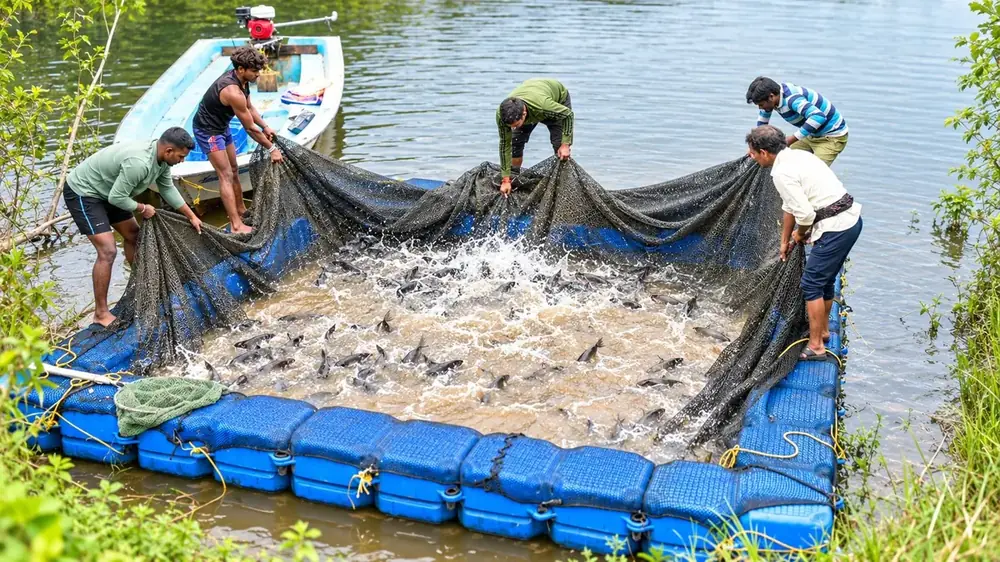
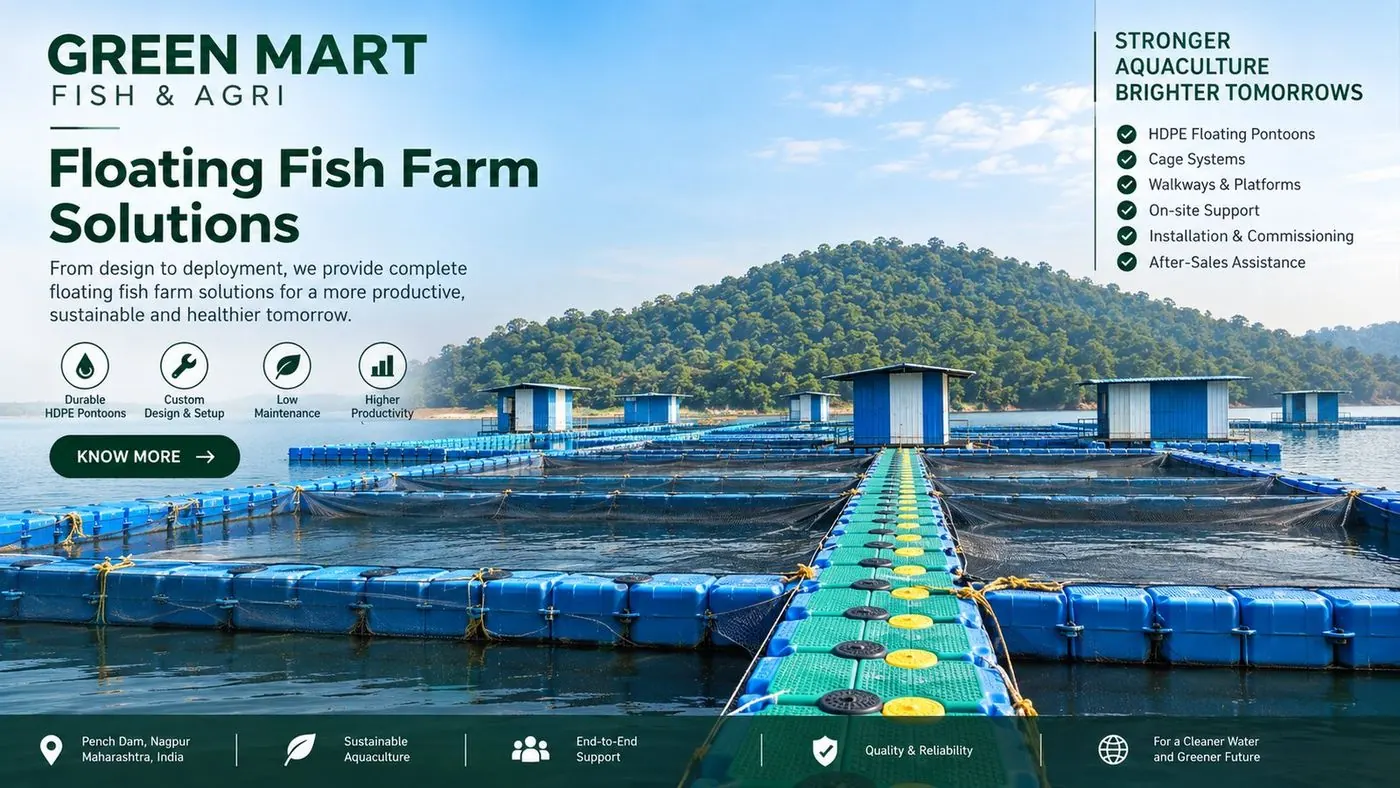
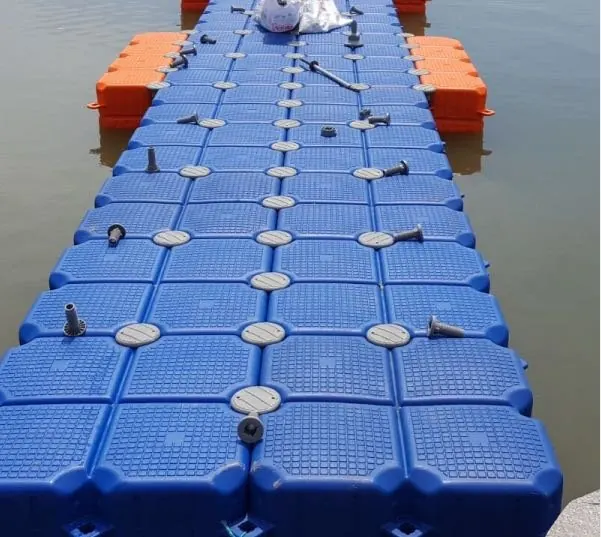
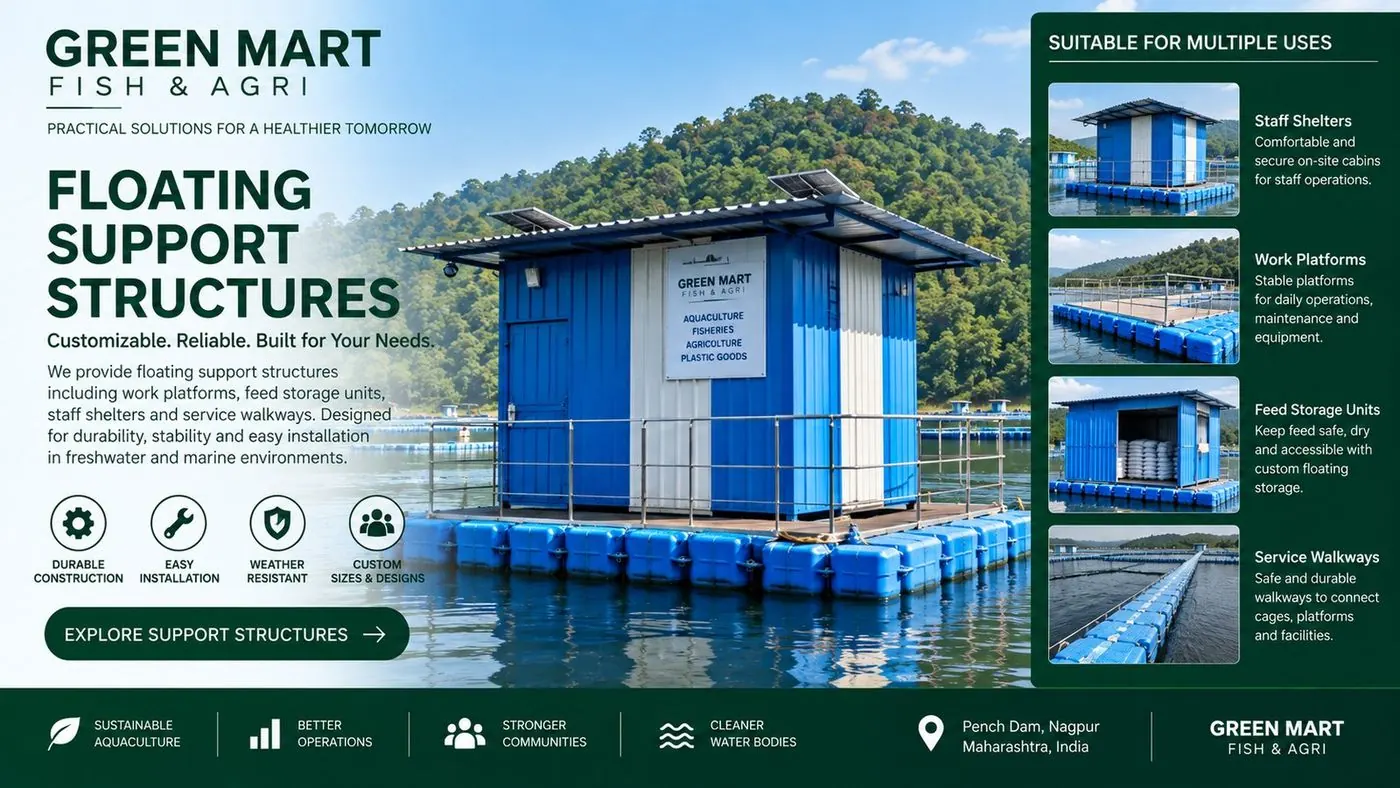
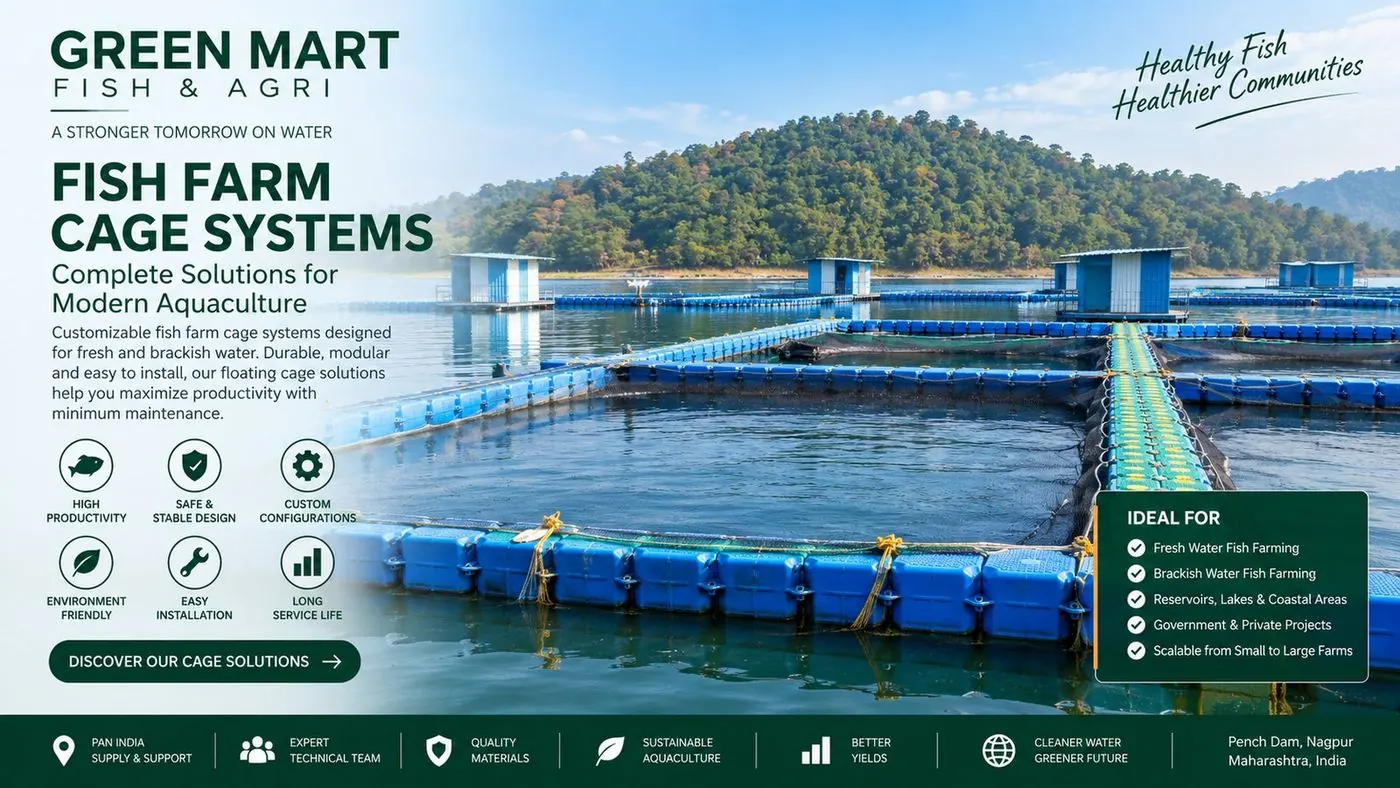
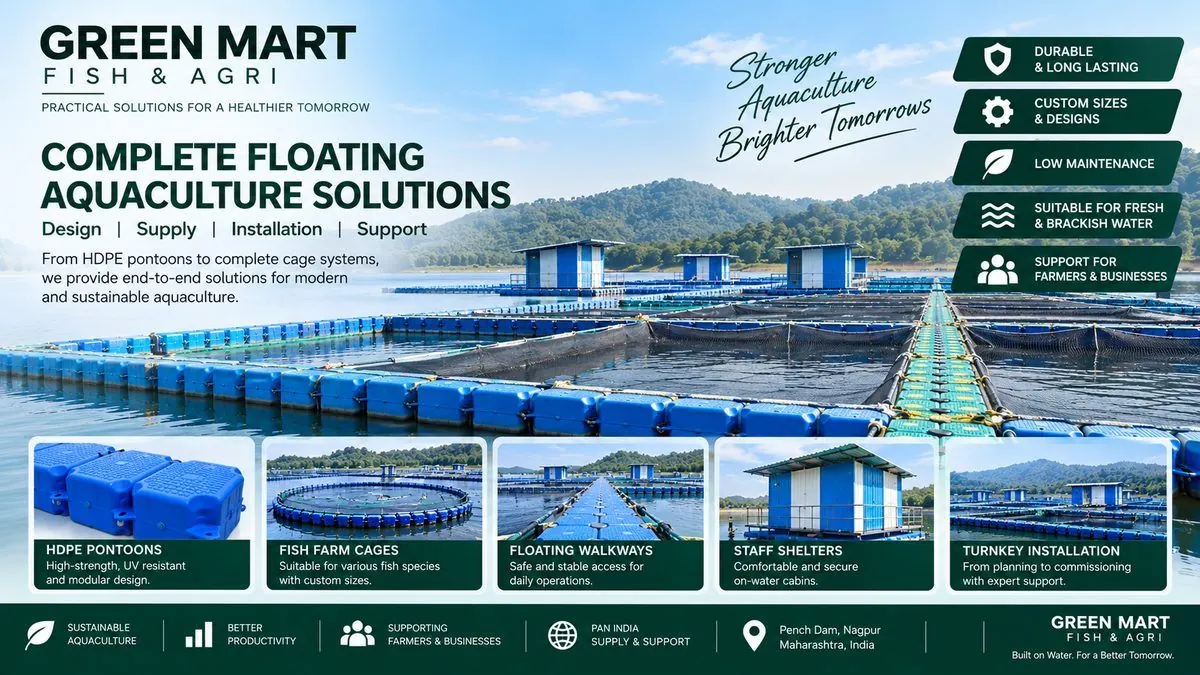
Green Mart provides floating infrastructure for cage-based fish farming, integrating buoyancy modules, cage perimeter structures, net-support arrangements and operational access into a practical farming system.
A cage configuration should be selected according to the site rather than using one standard design everywhere. Factors such as water depth, water-level variation, wind and wave exposure, stocking plan, operational access, anchoring conditions and maintenance requirements should be considered during planning.
A Typical System May Include
- Floating perimeter / pontoon structure
- Fish containment net
- Net-support and fastening arrangement
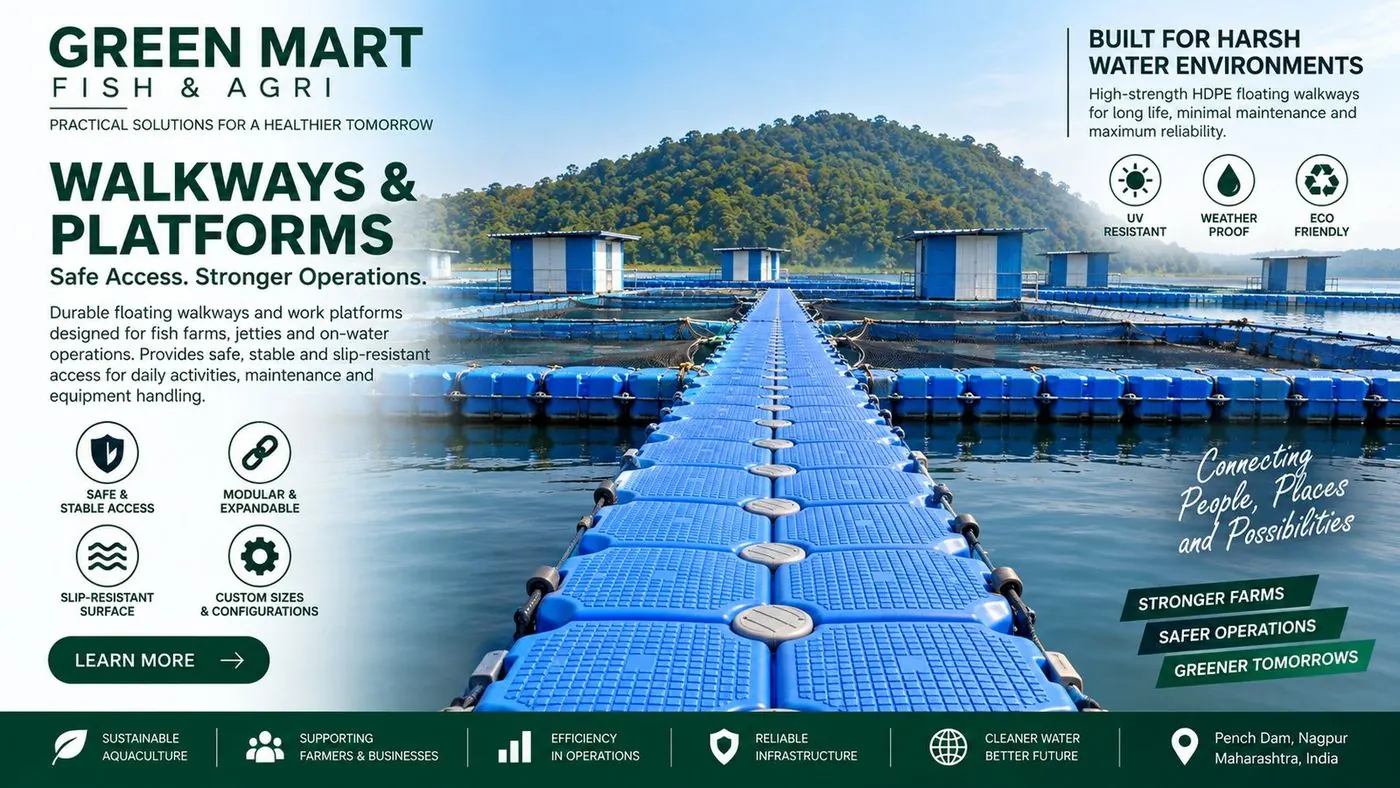
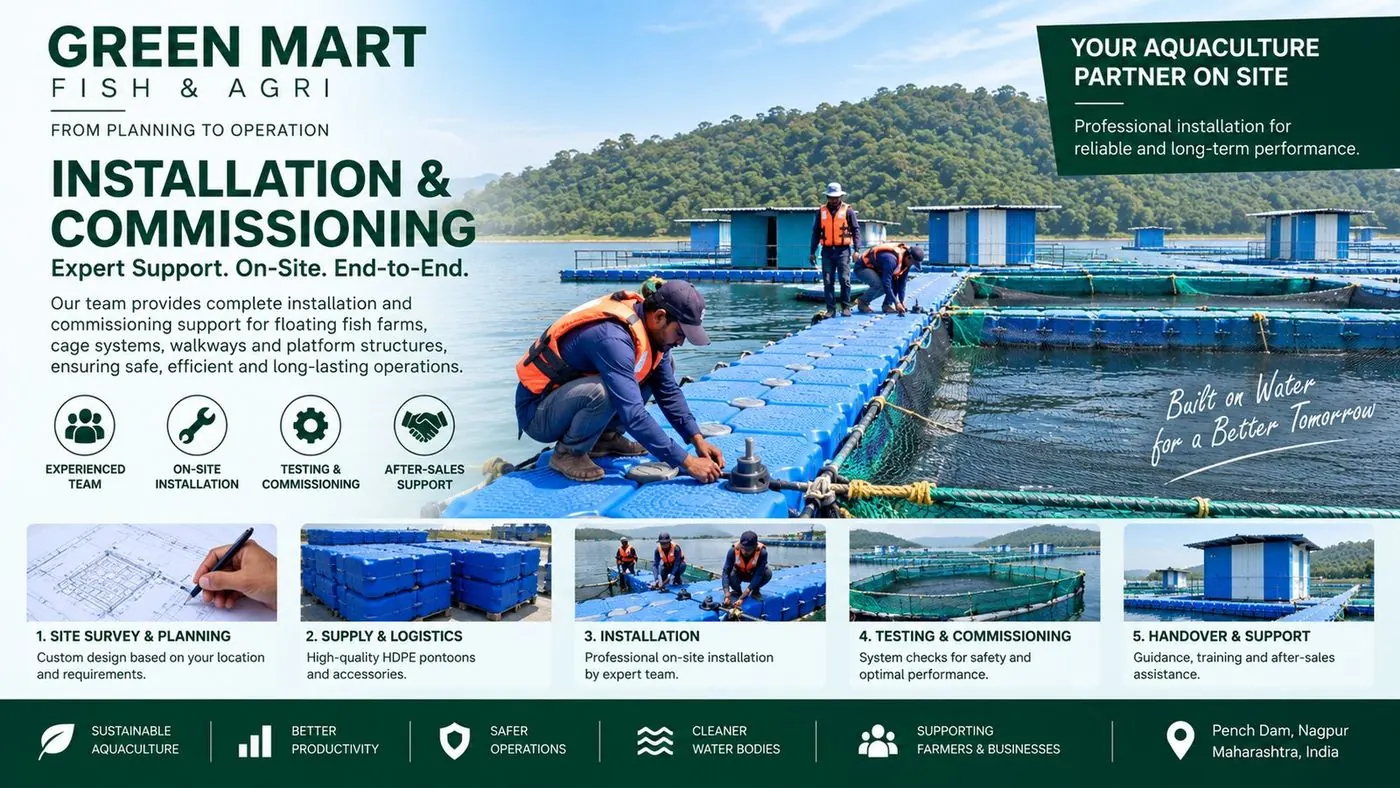
- Access walkway
- Connection hardware
- Mooring / anchoring arrangement
- Service platform
- Optional floating shelter or feed-storage structure
Ideal For
- Fresh water fish farming
- Brackish water fish farming
- Reservoirs, lakes & coastal areas
- Government & private projects
- Scalable from small to large farms
Why Floating Cages on a Lake or Reservoir
Floating cage culture makes use of an existing natural water body — a reservoir, lake or dam — instead of requiring dedicated pond construction or land excavation. Compared with other common approaches, it offers some practical advantages:
- No land or excavation cost — uses existing water surface rather than digging and maintaining earthen ponds.
- Continuous water exchange — natural flow through the cage helps keep oxygen and water quality more stable than a closed pond, without aerators running constantly.
- Easier waste dispersal — waste disperses into the larger water body instead of concentrating in a small enclosure.
- Scalable in stages — more cages can be added to expand capacity without acquiring new land.
- Simpler monitoring and harvest — cages are reached by walkway or boat, so feeding, checks and harvesting are more straightforward than draining or netting a large pond.
- Separation between batches — individual cages keep stock physically separated, unlike a single open pond.
Trade-offs worth knowing: floating systems depend on consistent access and permission for the water body, and are more exposed to weather — wind, wave action and changing water levels — than a controlled pond. That is exactly why site assessment and proper mooring matter; see Installation & Commissioning.
Need a Floating Solution for Your Project?
Share your project location, water body, required application, approximate dimensions/quantity and any available photographs. Green Mart can discuss the appropriate solution and project requirements.